
Grace Guslander and the invention of a resort
She found the coconut grove nearly dead, with about seventy-five trees left of Lindeman’s planting, and nursed it back. She built the property around the lagoon rather than around the ocean view, which was an unusual decision at the time and became the thing people remembered. She named the rooms rather than numbering them. She filled the place with a particular kind of theater, most famously the evening torch-lighting ceremony, in which a conch shell sounded and torches were lit through the grove at dusk.
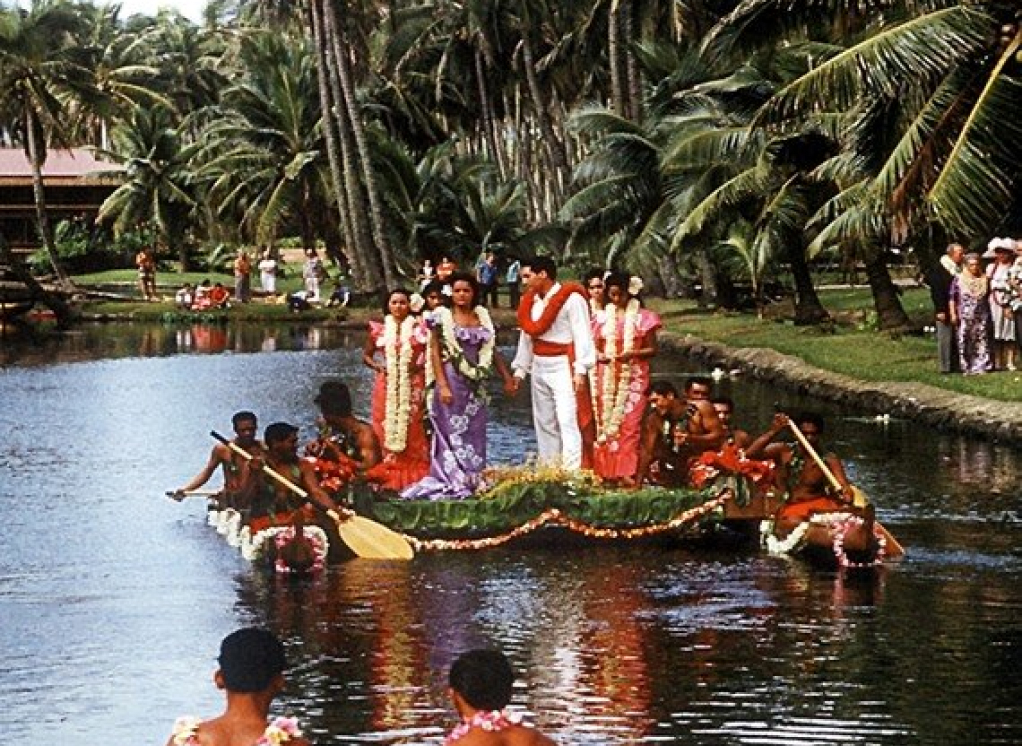
Both things are true at once: she was a genuinely gifted hotelier who made something people loved and remembered for a lifetime, and much of what she made was invented mid-century atmosphere rather than inherited practice. Being clear about which is which is not a criticism of her. It is the only honest way to talk about a place where actual Hawaiian history and mid-century resort performance sit on the same ground.
The restored resort will revive the torch-lighting ceremony. It will also include a cultural center and museum dedicated to the history of Wailua and Kauaʻi, which is a different undertaking and is meant to be one.