
Wailuanuiahoʻāno & Queen Deborah Kapule
Wailuanuiahoʻāno
The place is Wailua, on the eastern shore of Kauaʻi, where the Wailua River meets the sea. In traditional times it was known as Wailuanuiahoʻāno, which is commonly translated as great sacred Wailua.
This was the principal seat of Kauaʻi’s aliʻi nui, the island’s paramount chiefs. The Wailua ahupuaʻa ran from the mountains to the ocean, and its people farmed the fields along the river, harvested an inland fishpond, and fished the coastal waters. Certain areas were set aside for aliʻi and kāhuna alone.
Within roughly a mile and a half of the river mouth stand the sites that make up the Wailua Complex of Heiau, designated a National Historic Landmark in 1962 and now largely within Wailua River State Park.
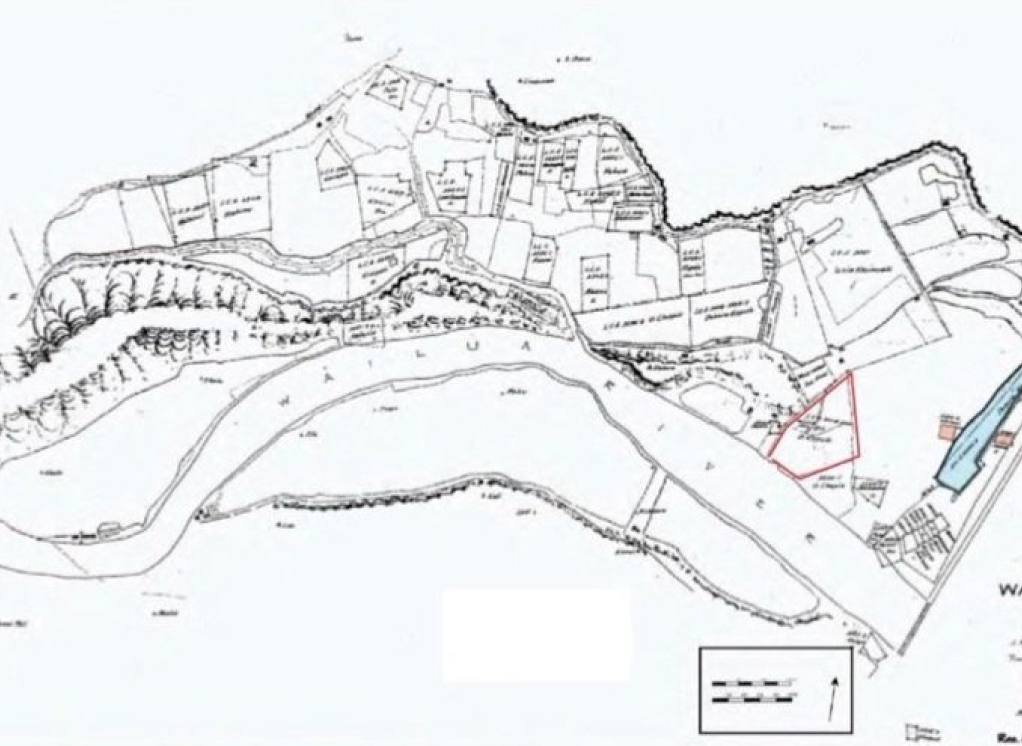
Hikinaakalā, the rising of the sun, sits at the mouth of the river. It is where the first light striking Kauaʻi from the eastern sea was met with prayers and chants, and it is associated with Hauola, a puʻuhonua or place of refuge. Malae, on the south side of the river, is the largest surviving heiau on the island. Poliʻahu sits on a bluff above the river to the north. Holoholokū, also called Kalaeokamanu, is understood to be the oldest heiau on Kauaʻi, built well before 1200 AD.
Beside Holoholokū are the Pōhaku Hoʻohānau and the Pōhaku Piko, the birthing stone and the umbilical stone. Women of the highest rank came here to give birth, and the piko of their children were secreted away in the adjacent stone. A chief born at Wailua carried a standing that a chief born elsewhere on the island did not. This is a large part of what made this stretch of coast what it was.
There are also petroglyphs at the river mouth, visible when the sand shifts, and a bellstone above the river that was struck to announce a royal birth.
Coco Palms does not sit on the heiau complex. It sits within the same landscape, in an ahupuaʻa whose significance is a matter of documented record rather than interpretation. Every decision on this property is made with that in mind, guided by a cultural advisory committee of Kauaʻi kūpuna.
Queen Deborah Kapule
Deborah Kapule was Kaumualiʻi’s queen, and after his death in 1824 she remained a figure of consequence on the island. She lived near the banks of the Wailua River, not far from where the hotel would later stand. She kept a substantial household, maintained taro and fishponds, and became known for receiving visitors, including foreigners, with considerable hospitality. Travelers’ accounts from the period describe her generosity in some detail.
She is worth naming here for a reason beyond the biographical. When people describe Coco Palms as the place where Hawaiian hospitality met the traveling world, the meeting was already several generations old by the time a hotel was built. Kapule was doing it on this ground in the 1830s.