A Legendary Place
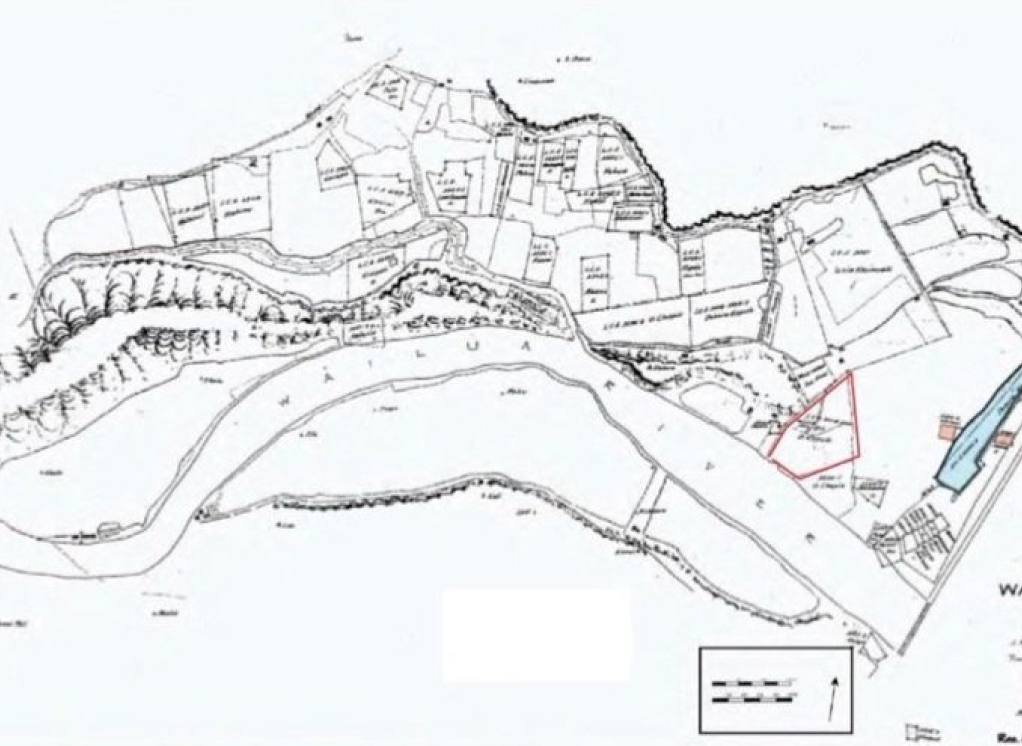
- The place is Wailua, on the eastern shore of Kauaʻi, where the Wailua River meets the sea. In traditional times it was known as Wailuanuiahoʻāno, which is commonly translated as great sacred Wailua.
- Though she did not live on the site, Queen Deborah Kapule was known to always be friendly to foreigners and entertained them with much hospitality in the days of her prosperity at her home located nearby on the banks of the Wailua River.
1890s, Lindeman and Copra
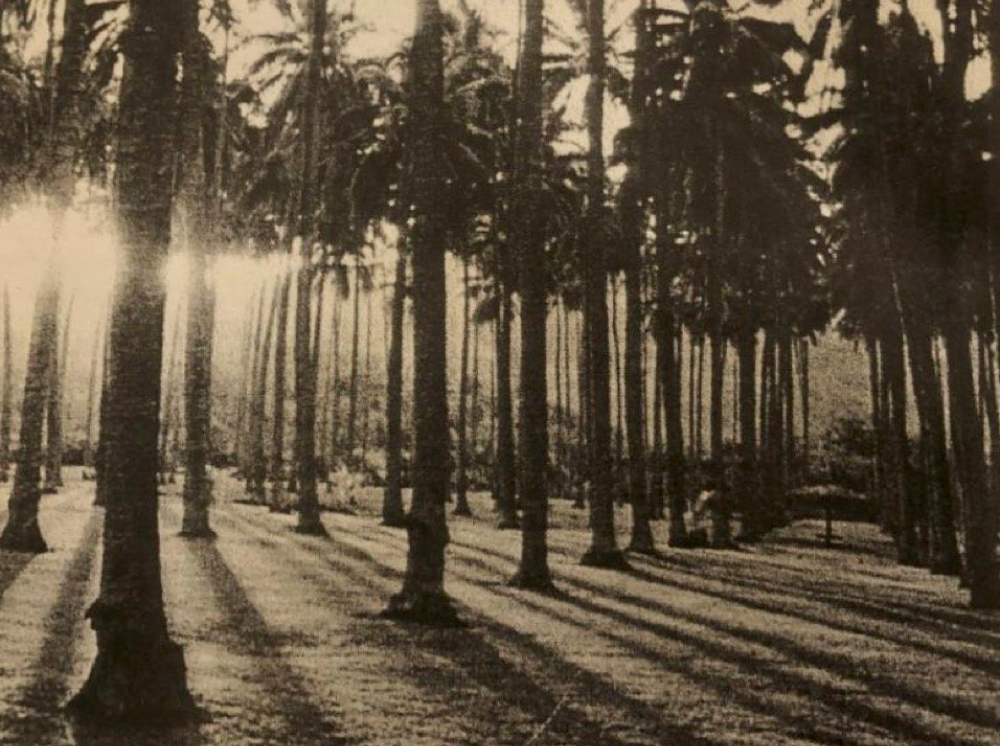
- In the 1890s the property came into the hands of a German businessman named William Lindeman, who planted close to two thousand Samoan coconut palms with the intention of producing coconut oil and copra.
- The venture failed. Copra never became a viable industry here, and Lindeman's plantation was abandoned as a commercial enterprise.
- The trees stayed.
- This is the origin of the coconut grove that gives the property its name and its character, and it is one of the odder facts in the whole history: the most recognizable feature of Coco Palms is the residue of a business that did not work.
- By the 1950s the grove had declined badly, down to roughly seventy-five surviving trees. What happened next is covered further down this page.
Early 1900s to 1952: the Coco Palm Lodge
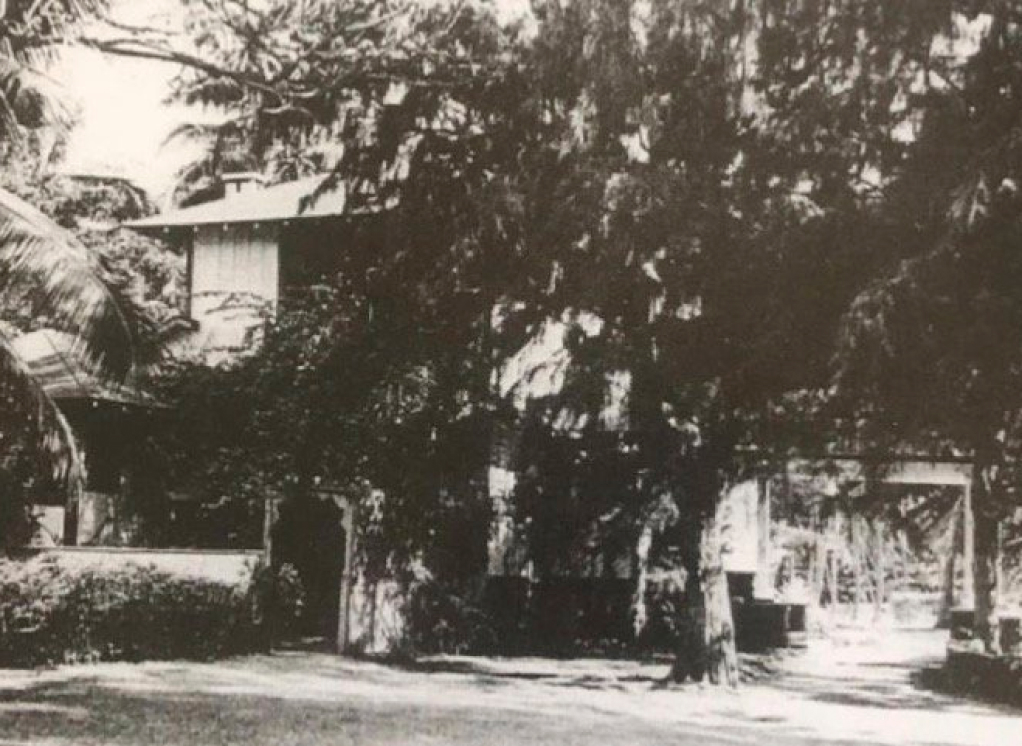
- After Lindeman, the property passed to Alfred Hills and his wife Veda, who established a small hotel of twenty-four rooms called the Coco Palm Lodge.
- It was a modest operation on a quiet stretch of the east side. Kauaʻi in this period was not a resort destination in any meaningful sense. Visitors came, but not in numbers, and the accommodations available reflected that.
- In 1952, by then widowed, Veda Hills sold the lodge to Lyle Guslander.
1953: Coco Palms opens
- Guslander hired a manager named Grace Buscher, whom he would later marry, and gave her the job of running and expanding the property.
- The hotel opened as Coco Palms in 1953. What followed over the next three decades was one of the more remarkable runs in the history of Hawaiian hospitality, and it was largely her doing.
1950s - 1980s, The Glory Years
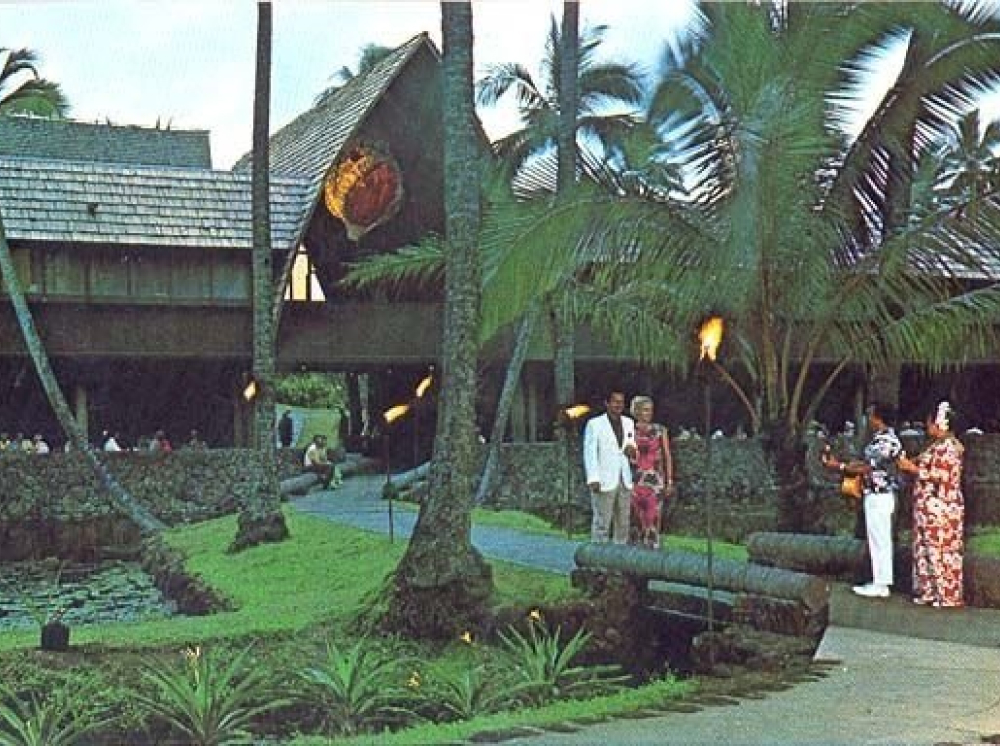
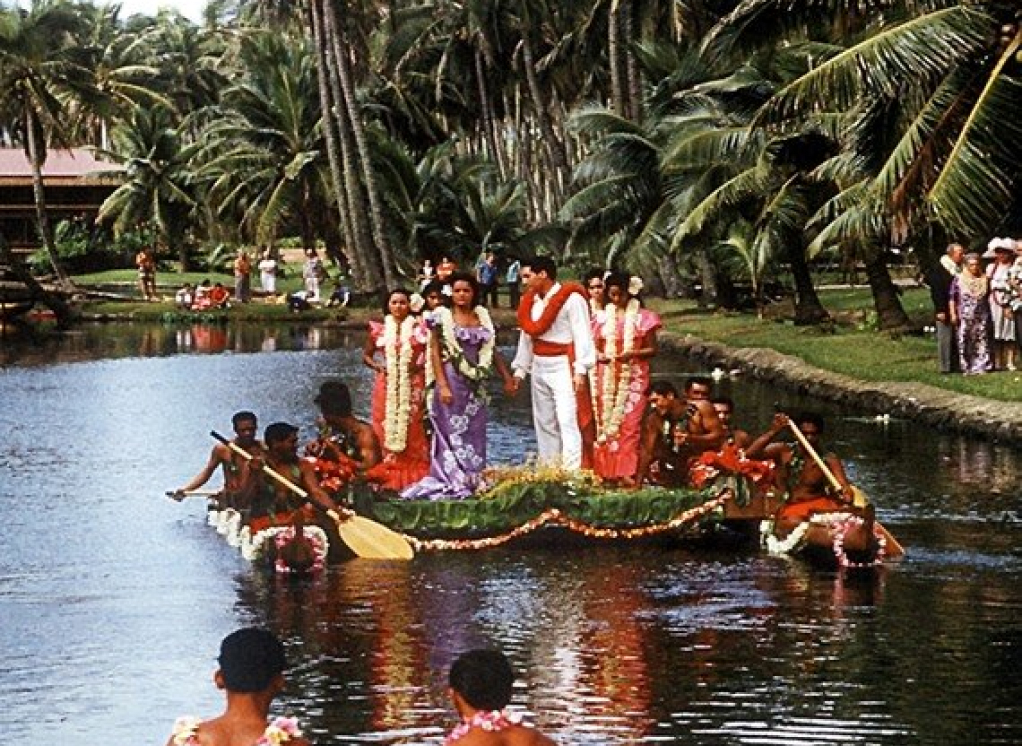
- From the mid-1950s into the 1980s, Coco Palms was among the best-known resorts in Hawaiʻi.
- It drew the Hollywood traffic of the era. Elvis Presley, Rita Hayworth, Bing Crosby, Frank Sinatra, and Gene Autry all passed through. Weddings at the lagoon became a signature, and generations of couples married there.
- The property expanded steadily through this period, adding rooms, restaurants, and the shoreline dining that anchored the resort. For most of three decades it was the reason a substantial number of visitors came to the east side of Kauaʻi at all.
1992, Hurricane Iniki
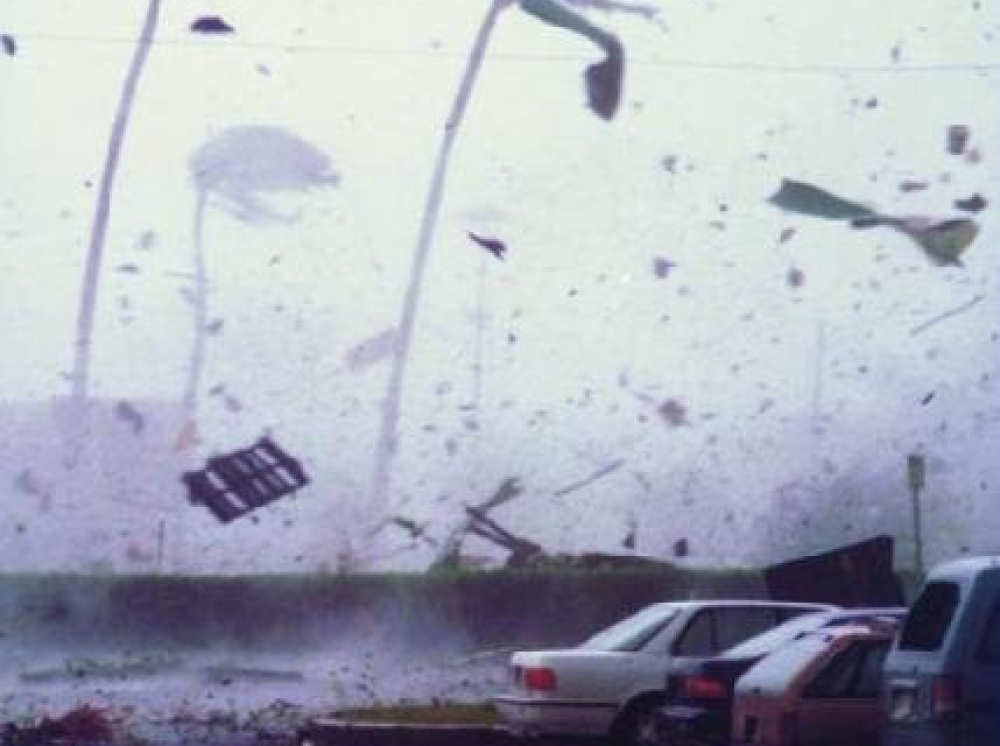
- On September 11, 1992, Hurricane ʻIniki made landfall on Kauaʻi as the most powerful hurricane to strike the Hawaiian Islands in recorded history.
- The damage to the island was severe and general. Thousands of homes were damaged or destroyed, the island's infrastructure was crippled, and the visitor economy stopped. Coco Palms was hit hard, along with most of the built environment on that coast.
- The hotel closed. It never reopened.
- Several Kauaʻi resorts damaged by ʻIniki were rebuilt within a few years. Coco Palms was not, and the reasons had less to do with the storm than with what came after it: insurance, ownership, financing, and the particular difficulty of restoring a property of this size on land of this significance.
Thirty Years of Paused Progress
- What followed was three decades of announcements.
- The property changed hands repeatedly. Plans were proposed, permits were sought, investors came and went, and nothing was built. A 2015 effort to reopen the resort under the Hyatt brand advanced further than most before collapsing in 2019.
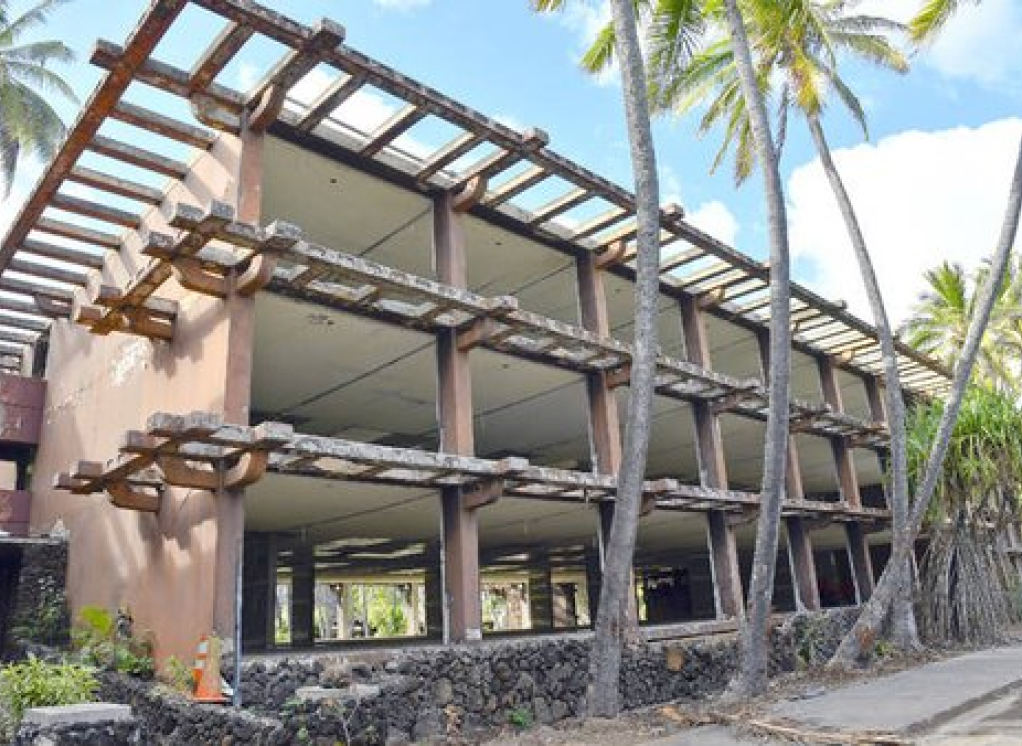
- Meanwhile the buildings stood open to the weather. Vegetation took the site. The structures deteriorated past the point of saving, and the property became one of the most photographed ruins in the state, drawing trespassers, tour operators, and a steady stream of people who had heard the stories.
- The grove kept growing.
2022 to now
- In 2022, Reef Capital Partners acquired Coco Palms through a state court foreclosure after the previous ownership group defaulted.
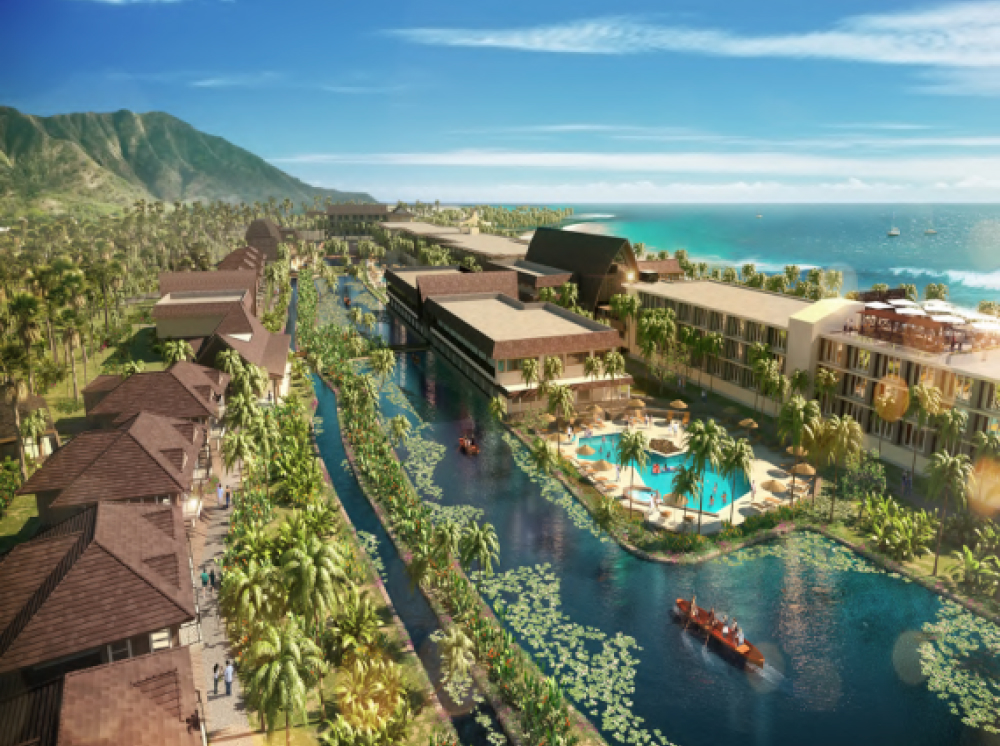
- In June 2024, Kimpton Hotels & Restaurants announced a partnership to establish the restored property as Coco Palms, A Kimpton Resort, the first Kimpton in Hawaiʻi. Highgate will operate the hotel.
- Three large concrete structures that were unsound after thirty years of exposure have been demolished, along with other areas that posed a safety risk. Below-grade work is underway. In June 2026, the project closed $431 million in construction financing. The current target for opening is 2028.
- The restoration is guided by a cultural advisory committee of Kauaʻi kūpuna, and the plan includes a cultural center and museum dedicated to the history of Wailua and Kauaʻi.
- Not everyone on Kauaʻi agrees that a hotel belongs on this land. That disagreement is serious, it is long-running, and it deserves to be stated plainly on a page about the history of this place rather than left out of it.